Protected zinc – advantages and potential
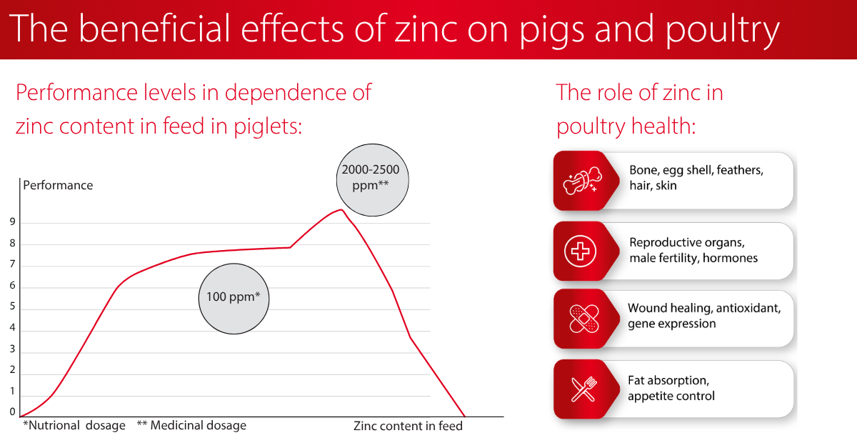
Zinc is an essential trace element that acts as a co-factor in over 300 enzymes. Zinc is therefore a structurally important element that plays a fundamental role in livestock across numerous areas, including cell division, the immune system, skin and bone integrity, as well as the intestinal barrier and the gut microbiome.
A lack of zinc therefore quickly leads to deficiency symptoms, which soon become apparent not only in the animal’s performance but also in its health. For this reason, zinc is usually added to feed to meet the animal’s requirements.
Problems associated with zinc supplementation
In the past, generous safety margins were often applied when supplementing zinc in feed rations, in order to ensure not only a reliable supply of the trace element but also to utilise the therapeutic effects of zinc (e.g. to prevent diarrhoea when weaning piglets). However, if levels in the feed are too high, the element is excreted in increased amounts via the faeces. Excessive zinc intake should be avoided, as high doses can not only have toxic effects on the animal but also pose risks to the environment through the accumulation of heavy metals. For this reason, the EU has gradually reduced the maximum levels of zinc permitted as a feed additive. The legal maximum amounts in feed in the EU are, for example, 120 ppm zinc for poultry (native content plus additive) and 150 mg total zinc for pigs.
Not all zinc is the same
Current recommended intake levels from various institutions vary considerably in some cases, ranging from 40 ppm (NRC) to 110 ppm of added zinc (Aviagen) for broilers. However, the source of the zinc is rarely specified. The choice of zinc source is, however, of crucial importance for zinc bioavailability – as a rule of thumb, zinc bioavailability is ranked as follows:
Zinc oxide < Zinc sulphate < Zinc chelate
The aim of zinc supplementation should be to release zinc ions in the small intestine, where they are absorbed by the animal. Zinc sulphate and zinc oxide dissolve in the acidic, aqueous environment of the stomach, releasing zinc ions there. However, the zinc ions cannot be absorbed here, and free zinc ions can form new complexes with other nutrients as pH levels change, making them less available for absorption by the organism. To ensure the most efficient supply of zinc, zinc ions should pass through the stomach intact so that they are only released in the small intestine.
Protected zinc as an alternative
To ensure an efficient, needs-based supply of zinc that complies with feed legislation, sufficient free zinc ions must therefore be transported to the small intestine. One way of achieving this is through the use of technologically processed zinc sources, which are protected by a special coating process that allows them to pass through the upper digestive tract without being altered by stomach acid. This significantly increases the availability of zinc ions in the small intestine and reduces zinc excretion, leading to a lower environmental impact.
Protected zinc for poultry
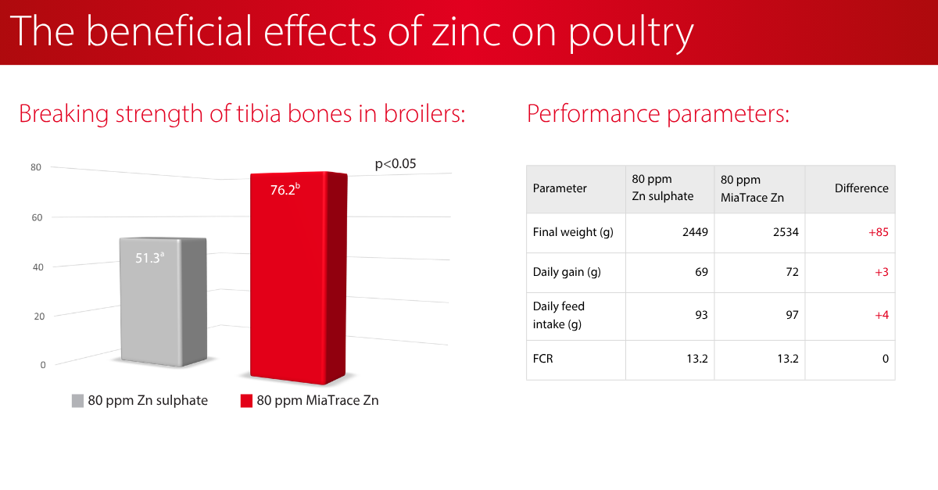
The use of such a protected zinc source (MiaTrace Zn) was tested on male broilers at the University of Applied Sciences in Bingen. Two groups were compared, each comprising 40 birds across 20 replicates. The control group was fed 80 ppm zinc sulphate, whereas the test group was fed the same amount of zinc from the protected zinc source. In addition to conventional performance data such as body weight development, feed intake, daily weight gains, feed conversion and mortality, the bone quality of the birds was also examined.
The results of the performance assessment showed that the animals in the experimental group had improved overall performance and increased feed intake. Furthermore, improved mineralisation of the tibia bones was observed in the chickens in the experimental group, leading to higher bone fracture strength.
Protected zinc in pigs
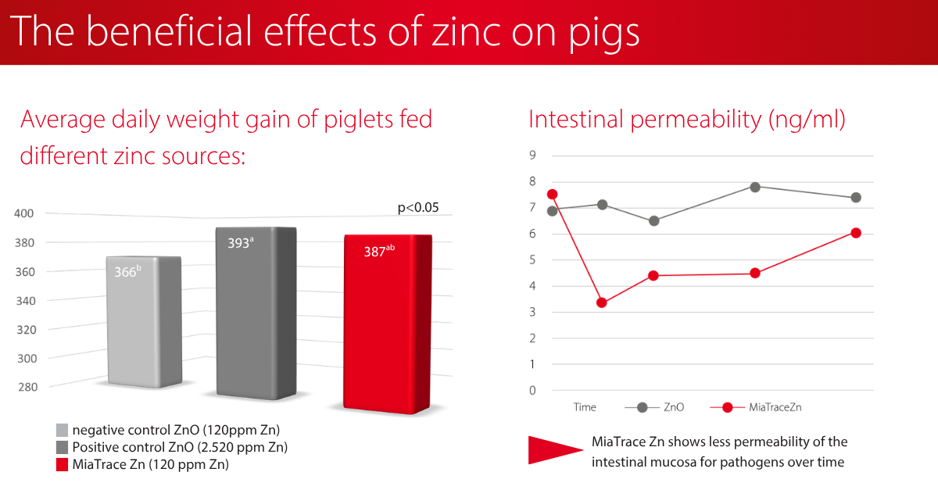
In pig fattening, too, protected zinc can improve the efficiency of the feed ration. Various trials have shown that the use of MiaTrace Zn in piglet rearing can increase average daily weight gains by up to 14%, whilst feed intake is increased by up to 7%. Furthermore, MiaTrace Zn demonstrates lower intestinal mucosal permeability to pathogens over time compared to zinc oxide.
Conclusions
Zinc is essential – but not all sources of zinc are equally effective. The results show that MiaTrace Zn is released exactly where it is needed, thereby measurably improving performance and bone quality in poultry, as well as weight gain in pigs. This means greater efficiency whilst reducing the environmental impact.
Curious? Get in touch with us and find out how protected zinc can optimise your zinc strategy.