Botanicals and intestinal health
Phytogenic active ingredients are nothing new in medicine or animal feed. For centuries, traditional medicine has used various active ingredients to relieve digestive disorders.
Medicinal herbs such as ginseng, for example, appeared in the Chinese pharmacopoeia as early as 196 AD. The Egyptians and Romans also used plants such as chamomile in tea and other preparations.
Despite this long tradition, the question remains whether phytogenic ingredients can actually make a significant difference in animal nutrition and health. However, modern studies provide a clear answer: yes—the connection between phytogens and animal health is scientifically well documented.
Importance for gastrointestinal health
The influence of plant-based active ingredients on gastrointestinal health has been particularly well researched. This area is also becoming increasingly important in animal husbandry. Optimizing feed conversion is a particularly important factor for livestock farms in ensuring long-term profitability and sustainability.
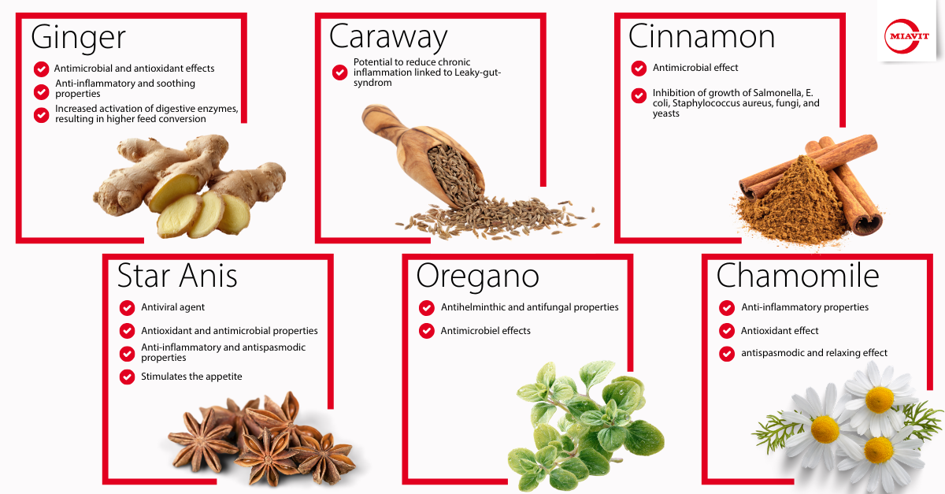
The focus of these efforts is on controlling the gut microbiota - a complex ecosystem of microorganisms that colonize the gastrointestinal tract of animals. The use of selected phytogenics with a high content of bioactive compounds is considered a promising way to positively influence the composition and functionality of the microbiota. The most important botanicals include ginger, caraway, cinnamon, star anise, oregano, and chamomile.
Synergy effects: Greater impact when combined
The effect of phytogenic active ingredients is enhanced when they are used as a mixture of different active ingredients that work synergistically. Miarom Intest, a feed supplement, focuses precisely on this: the mixture of selected phytogenic ingredients combines their individual benefits to create a harmonious synergy that promotes intestinal health—both preventively and to provide support in the event of acute problems.
Field trials in poultry farming
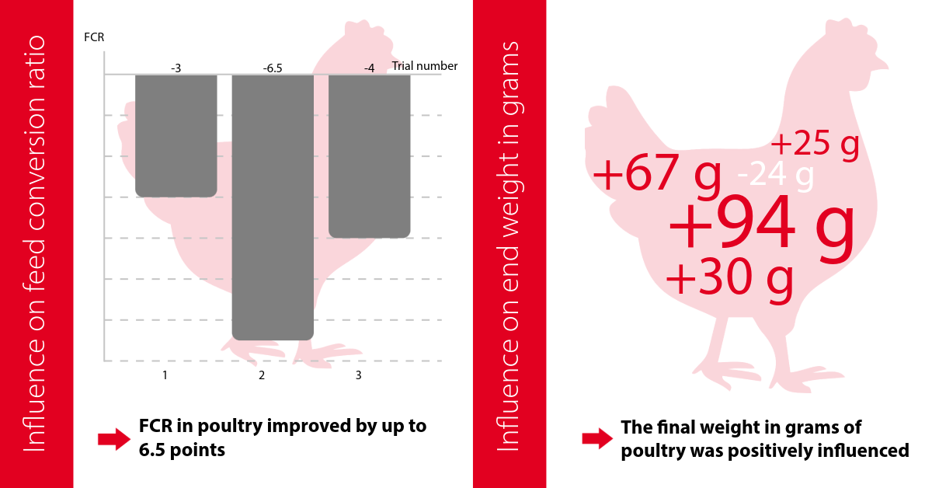
In field trials on a conventional broiler farm, Miarom Intest showed the following compared to the control group:
- Improvement in feed conversion ratio (FCR) by up to 6.5 points
- Higher final weight of the animals
- Significantly lower oocyst counts in feces
Field trial in pig farming
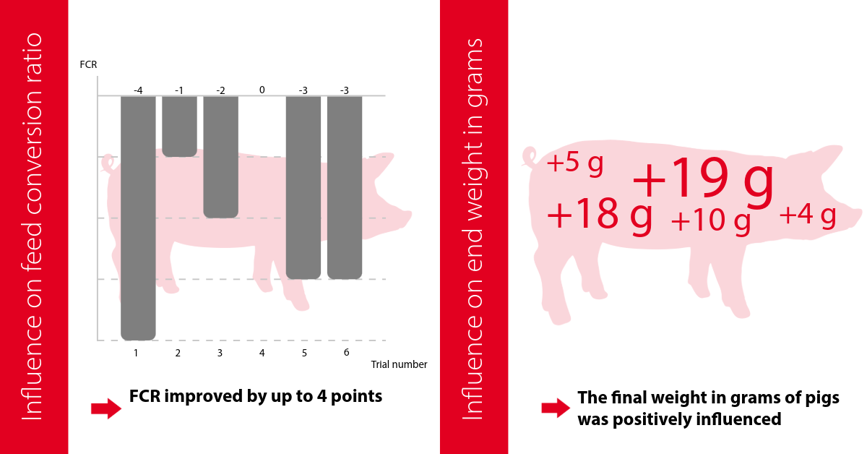
Another field trial examined weaned piglets. Here too, the test group that received Miarom Intest in an adjusted dosage showed:
- Significantly improved FCR
- Higher final weight
- 7% increase in positive lactobacilli in the intestine
The results highlight that phytogenic additives not only increase feed efficiency but also specifically promote intestinal health.
Conclusions
Phytogenic active ingredients have a long tradition—and their effectiveness in modern animal husbandry is now clearly scientifically proven. The combination of selected plant extracts, as found in Miarom Intest, has clear advantages in practice: better feed conversion, more stable intestinal health, and ultimately a more cost-effective animal production. The results from poultry and piglet trials make it clear: phytogens are not a trend, but a sustainable building block for healthy, efficient, and sustainable animal husbandry.
What experiences have you had with phytogenic active ingredients in animal husbandry? Feel free to share them in the comments!